
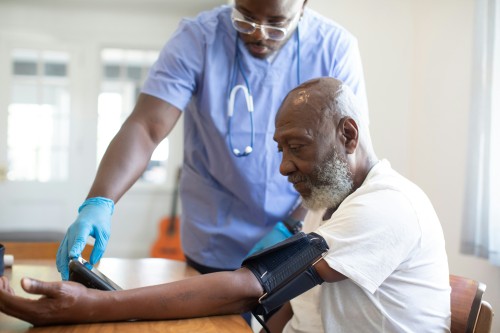
What makes a diagnostic technology suitable for rural healthcare facilities?
A practical guide for managers of hospitals, clinics and dispensaries choosing what to test on site, what to refer and how to keep both services working.
A clinic can have a rapid test in its store and still be unable to give a patient a result that day. The only trained operator may be away. The kit may be available while the required collection supplies are out of stock. The result may reach the nurse after the patient has left. Conversely, a test performed at a district laboratory can serve a rural clinic well when specimens are collected reliably, results come back promptly and someone acts on them. These are different ways of organising a diagnostic service. The choice starts with where patients lose time or drop out of the current pathway. 1 2
The gap between levels of care is well documented. A study of 8,512 facilities in ten low- and middle-income countries, including seven in Africa, found median availability across the selected diagnostics expected at each tier of 19.1% in basic primary care, 49.2% in advanced primary care and 68.4% in hospitals. The analysis used facility surveys conducted between 2004 and 2018 and included laboratory tests and imaging. It gives a historical comparison across facility tiers. A manager still needs local data to establish which tests are available on an ordinary shift and which patients get their results in time. 3
1. Define the decision and work backwards from the patient
Start with one clinical pathway. Write down who needs the test under national guidance, what specimen is required, who will act on the result and when it must be available to change care. Distinguish a result needed before the patient leaves from one that can safely return through a scheduled referral service. Ask what happens after a positive, negative or invalid result and where patients go when they need confirmation or treatment unavailable at the facility. The WHO Model List of Essential In Vitro Diagnostics can inform this work. Its online edition distinguishes testing settings, including primary care centres without a laboratory. Use it alongside national algorithms and the facility’s authorised scope of practice. 1 4
Follow recent requests through the existing system. The register may show that a test was ordered, the courier log that a specimen left, and the laboratory register that a result was issued. Compare those records with the patient’s clinical record. A result issued by the laboratory and a result reviewed by the responsible clinician are two separate milestones. Ask staff how they manage a specimen rejected for labelling, a result that never arrives and a patient who cannot be reached. When those events are identifiable, the manager can decide whether to improve collection, transport, result handling or access to testing. 2
Invite a nurse who collects specimens, a member of the laboratory team or district laboratory, a records officer and the person managing supplies to review the pathway together. Ask about the busiest day, weekends and periods when travel is difficult. Patient feedback can clarify whether a second visit is realistic and which contact arrangements are acceptable. For example, if people share a household phone, record an agreed way to ask a patient to contact the clinic without revealing sensitive information. Before choosing a technology, agree who will own the result from request to action.
2. Decide which tests belong on site
On-site testing is worth considering where the result can change care during the visit, where referral delays are substantial or where asking the patient to return creates a barrier. Verify that staff can deliver the next step, such as initiating care or arranging timely referral. A reference laboratory can be a better fit when a test is infrequent, needs specialist interpretation or requires conditions the facility cannot maintain. A combined arrangement can put time-sensitive tests close to the patient while the district laboratory handles confirmatory tests, complex analyses and backup. Each arrangement should be assessed against the turnaround required for the clinical decision. 1 2 4
The evidence illustrates what this choice can mean. In a cluster-randomised trial at 16 primary care centres in Mozambique, 89.7% of infants found to have HIV in the on-site testing arm started antiretroviral therapy within 60 days of sample collection, compared with 12.8% in the referred laboratory arm. Those figures reflect the specific referral system and clinical pathways studied. For managers considering on-site testing, the practical question is how much delay a local device could remove in their own service and whether the facility can act on the result promptly. 5
Uganda provides an example of strengthening the referral route. A retrospective evaluation examined 19 pilot hubs serving 616 facilities and analysed 876 early infant HIV sample–result records. The study reported a 46.9% reduction in sample-to-result turnaround with the hub transport system. It also reported a further reduction after introducing SMS printers to return results. The programme used dried blood spot specimens. A manager considering a hub for another test should check that its specimen is suitable for the proposed journey and that the receiving laboratory can meet the required schedule. 6
Agree the referral details with the receiving team. Write down which specimens the laboratory accepts, how they must be packaged and stored, which days the courier comes, and who checks overdue specimens. Record collection, dispatch, receipt and result timestamps where feasible. Decide how urgent results are escalated and who confirms receipt. Test the arrangement with a real collection and handover during normal service. If the courier misses a scheduled run, staff should know whether the specific specimen can wait, whether alternative transport is available or whether the clinic needs to call the patient back. 2
3. Check the whole workflow against the site
Electricity is a useful example of the difference between infrastructure on paper and infrastructure at the bench. A 2026 WHO fact sheet, drawing on national surveys from 2015 to 2022, estimates that about 15% of healthcare facilities in low- and lower-middle-income countries in sub-Saharan Africa had no electricity and about 40% had reliable electricity. WHO reports poorer access and reliability in rural facilities than in urban facilities within the same countries. For a site assessment, check how often the testing room loses power, how long outages last and which outlets are backed up. Confirm what happens to a test in progress and whether items needed for storage, reporting or sample preparation share the same backup supply. 7
Walk through the process from collecting the specimen to disposing of the used materials. Check whether staff can obtain the specified sample type, label it at the point of collection, prepare it safely and repeat the test if necessary. Ask where kits will be kept, where staff wash their hands and where sharps or other relevant waste will go. A 2026 WHO and UNICEF report estimates that about four in ten healthcare facilities globally met basic sanitation standards. Its scope includes water, hygiene, cleaning and waste management, which a facility can check directly in the rooms where it plans to test. 1 2 8
Storage and use conditions matter even for tests with no powered reader. In very hot areas, WHO’s malaria programme recommends selecting rapid tests with high thermal stability, ideally at 40–45 °C. This recommendation concerns the selection of malaria tests for hot environments. Check the labelled range for the specific test, including any differences between storage and use, and record actual conditions in the intended storage location. A suitable kit also needs enough shelf life on arrival to be used at the facility’s expected volume. If supplies arrive with short dating, agree with the district store whether smaller deliveries or redistribution between facilities are possible. 1 9
Diagnostic suitability also depends on what the test detects. WHO’s malaria programme advises moving away from exclusive use of tests based on the HRP2 antigen where at least 5% of Plasmodium falciparum cases are missed because of relevant parasite gene deletions. The facility manager’s role is to check which products the national malaria programme recommends for the area and keep staff informed when the testing algorithm or kits change. That example shows why a familiar format and an easy procedure are only part of the selection decision. 9
4. Make staffing and quality part of the daily routine
Watch intended operators use the test with the supplies, lighting, workspace and documentation they will have on duty. Ask them to demonstrate specimen identification, timing, reading and recording, and the response to an invalid test. Observe the busiest shift the service is expected to cover. A procedure that works uninterrupted during a demonstration may lead to missed timing steps or recording errors when the same person also receives patients and answers calls. Use the observation to decide whether to change the location, the workflow, the staffing plan or the platform. 1 2
Name a lead operator and cover for absences. Record who has demonstrated competence, what they are authorised to do and how supervisors will assess new or returning staff. Put a short procedure at the testing station, based on national guidance and the manufacturer’s instructions. Cover specimen acceptance, quality controls, result recording and escalation. Agree a schedule for supervision and involve the district laboratory in external quality assessment where available. Decide who can suspend testing when controls fail and who checks corrective action before testing resumes. 2
A Ugandan tuberculosis trial shows how management changes can accompany the technology. At 20 community health centres, a package comprising on-site molecular testing, workflow redesign and monthly performance feedback produced a 56% higher rate of starting treatment for confirmed tuberculosis within 14 days of presentation, using the trial’s count-based primary analysis. The design assessed the package as a whole. In a facility rollout, review whether specimens are collected, results reach the clinical team and treatment or referral is initiated, alongside device performance. 10
Configure the result route before the first patient is tested. Name the person responsible for reviewing results on each shift and the backup who handles outstanding results. Where connectivity is intermittent, use an authorised temporary record and assign someone to reconcile it with the patient record once systems are available. Include a separate instruction for urgent results. A quick drill can simulate an absent staff member or a reader failure and show whether a result can still reach the right clinician. Record what happened and change the process where responsibility was unclear. 2
5. Plan for stock-outs, breakdowns and unexpected demand
Review the full set of items needed for one complete test. Include the collection materials, kits, controls, protective supplies and waste containers specified for the service. At low-volume sites, short shelf life may make smaller packs practical. At busier facilities, or during predictable peaks, delivery delays may justify a buffer if storage and shelf life allow. Base reorder quantities on actual use and lead times, and review expiry regularly. Train staff to issue usable stock with the earliest expiry first and to record any losses. 1 2 9
Set out what the facility, district team and service provider will each do during a breakdown. Keep the contact details at the testing station, agree how a fault is reported and record when routine testing resumed. Check whether replacement parts or a replacement device can be supplied within the period the facility can manage. Where equipment is shared by several programmes, agree whose patients are prioritised when demand exceeds capacity. A defined backup route can cover both equipment downtime and temporary interruption of deliveries. Confirm that the receiving laboratory has agreed to take the additional specimens. 1 2
When reviewing running costs, focus on whether the service can be sustained through the next budget cycle. Include operator time, training for replacements, quality controls, specimen transport, reporting and maintenance. A cost-effectiveness analysis alongside the Ugandan tuberculosis trial found that decentralised molecular testing was less economically favourable at lower testing volumes. The analysis concerns that strategy and setting. A manager can use past facility activity to estimate how frequently the proposed device would run, then discuss whether shared placement or referral would maintain patient access with the staff and funding available. 11
6. Pilot the service and measure whether patients benefit
Before a routine pilot, use a short baseline period or recent records to establish where delays and losses occur. Agree a target for each important milestone with the clinical team and referral laboratory. For example, decide the acceptable time from collection to clinical review separately for urgent and scheduled samples. During the pilot, keep a count of patients who meet testing criteria but never have a specimen collected. This group is easy to miss if the review begins with the instrument log. Track each stage using the records staff can maintain after the pilot. 2 10
The following measures are proposed for facility management. Choose a small set suited to the clinical pathway. Keep the denominator visible, especially at sites where a few events can substantially change a monthly percentage.
| Management question | Measure to review |
|---|---|
| Are eligible patients getting tested? | Eligible encounters with a specimen collected, divided by eligible encounters in the review period |
| Are results available in time? | Valid results reviewed by the clinical team within the agreed deadline, divided by test requests whose deadline fell in the review period |
| Where are specimens being lost? | Rejected or unaccounted-for referred specimens, divided by specimens dispatched, with reasons recorded separately |
| Is the service available when expected? | Scheduled testing days disrupted by missing supplies, equipment problems or lack of trained cover, with each cause logged |
| Does the result lead to care? | Patients with an actionable result and documented follow-up within the locally agreed interval, divided by patients with actionable results due for follow-up |
Review the figures with staff and look at individual cases when a measure deteriorates. If results are timely whenever the device is used but many eligible patients never reach specimen collection, check how referrals are made within the clinic. If delays cluster on one day, check staff cover and courier schedules before changing equipment. If negative or invalid results are repeatedly handled outside the agreed algorithm, review training and escalation with the clinical lead. For small numbers, a brief case-by-case review may tell the team more than a graph. 2 10
Reach a decision at the end of the pilot. Continue if the service meets the agreed clinical timetable and staff can sustain it on routine shifts. Adapt the workflow and review it again if the remaining barriers can be addressed through training, supplies or transport. Where testing cannot be delivered safely or reliably, check whether an improved referral arrangement or a shared platform at a nearby facility would meet the same patient need. Document the responsibilities and budget for the option selected so that the service can continue when the pilot support ends. 1 2
A worked example for a district clinic
Suppose a rural clinic collects specimens for a test whose results are usually expected within three days under its local service agreement. Over one month, 40 test requests reach their agreed deadline. Thirty-two results are issued within three days, but only 20 are reviewed by the clinical team within that time. These numbers are illustrative. The distinction matters because the laboratory met the deadline for 80% of requests while the clinic met the clinical review target for 50%. An analyser at the clinic could change the first figure. The team still needs to understand the gap between reporting and review.
The manager can examine the 12 results issued on time that were reviewed late or remained unread. If the results arrived in a shared inbox on days when no one was assigned to check it, the immediate change is to assign cover and confirm receipt. For the eight requests whose results were late or missing, the team can check the courier log and laboratory receipt times. If specimens routinely wait two days for pickup, a revised collection schedule or shared transport with neighbouring facilities is an option to discuss.
In the next review, the manager should check both the same deadline measure and the number of patients who have to make an extra visit. If collection and reporting are reliable but the referral timetable still prevents timely clinical decisions for some patients, the facility has evidence to justify assessing on-site testing for that group. Apply the same measures to both routes so the choice reflects what happens to patients under routine conditions.
What managers can ask of new diagnostics
Managers can ask developers to show performance with the intended specimen, operators and conditions of use. Ask how field evaluation handles invalid results, interruptions and communication of results. DIDIDI’s published work plan offers an example in parasitic disease diagnostics. Its team plans to develop a smartphone-linked platform for detecting helminth eggs, working with frontline health workers and communities in Uganda and Kenya. Planned clinical and field studies include assessments of accuracy, speed and usability. For a manager considering any emerging technology, those studies can inform whether it is worth assessing against the facility’s own pathway and service requirements. 12
A suitable test is one the facility can offer to eligible patients during normal operations and whose result reaches someone who can act in time. Write that expectation into the selection criteria, the referral agreement and the pilot measures. It gives staff a concrete standard for deciding which tests to keep at the facility, which to share across the district and where the current service needs work first.
References
-
WHO (2017). Guidance for procurement of in vitro diagnostics and related laboratory items and equipment. www.who.int/publications/i/item/9789241512558
-
WHO (2011). Laboratory quality management system handbook. www.who.int/publications-detail-redirect/9789241548274
-
Yadav H et al. (2021). Availability of essential diagnostics in ten low-income and middle-income countries. The Lancet Global Health. pmc.ncbi.nlm.nih.gov/articles/PMC8526361/
-
WHO. Fifth WHO Model List of Essential In Vitro Diagnostics, online edition. edl.who-healthtechnologies.org/
-
Jani IV et al. (2018). Effect of point-of-care early infant diagnosis on antiretroviral therapy initiation and retention of patients. AIDS. pubmed.ncbi.nlm.nih.gov/29746301/
-
Kiyaga C et al. (2013). Uganda’s new national laboratory sample transport system. PLOS ONE. pmc.ncbi.nlm.nih.gov/articles/PMC3827263/
-
WHO (2026). Electricity in health-care facilities. www.who.int/news-room/fact-sheets/detail/electricity-in-health-care-facilities
-
WHO and UNICEF (2026). Progress on water, sanitation, hygiene, environmental cleaning and waste management in health care facilities 2015–2025. www.who.int/publications/m/item/progress-on-water–sanitation–hygiene–environmental-cleaning-and-waste-management-in-health-care-facilities-2015-2025
-
WHO Global Malaria Programme. Selecting and procuring malaria RDTs. www.who.int/teams/global-malaria-programme/case-management/diagnosis/rapid-diagnostic-tests/selection-and-procurement
-
Cattamanchi A et al. (2021). Multicomponent strategy with decentralized molecular testing for tuberculosis. New England Journal of Medicine. www.nejm.org/doi/full/10.1056/NEJMoa2105470
-
Thompson RR et al. (2023). Multicomponent strategy with decentralised molecular testing for tuberculosis in Uganda. The Lancet Global Health. pubmed.ncbi.nlm.nih.gov/36669808/
-
DIDIDI. Project description, Work Package 1. www.dididi.eu/project/project-description